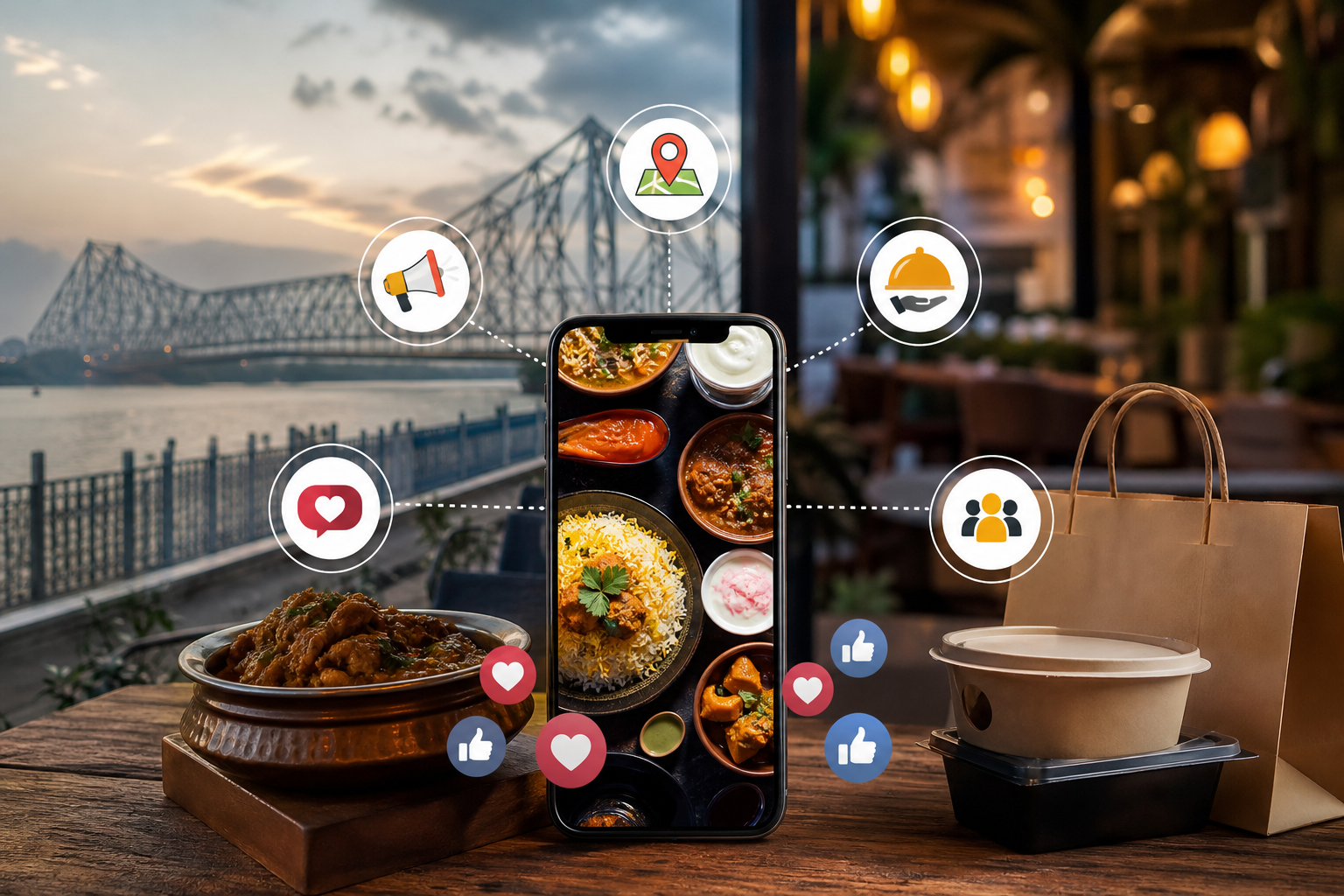

A practical guide for Indian ecommerce teams evaluating Google Shopping. It explains the difference between free listings and paid campaigns, then provides a pre-launch readiness check covering Merchant Center, product data, pricing, shipping, returns and store trust signals.
Uploading a product feed is not the same as being ready for Google Shopping. An Indian ecommerce store may have a technically valid feed but still face poor visibility, product warnings, checkout drop-offs or unprofitable clicks because the product page, shipping information, pricing and measurement are not prepared.
The practical decision is therefore not simply “free listings or paid Shopping?” First ask whether your store can receive and fulfil the demand that Google may send. Then use free listings to establish a baseline where suitable, and add paid campaigns when you need more control and have enough commercial data to manage spend.
What Google Shopping includes for Indian ecommerce
Google Shopping activity usually involves three connected parts:
- Google Merchant Center: the account where your business details, product data, shipping information and policy status are managed.
- Free product listings: eligible products can appear in unpaid product discovery surfaces when Google accepts the data and considers the listings eligible.
- Paid Shopping campaigns: advertisers pay for clicks or other campaign activity and use campaign settings, budgets, bidding and product selection to control traffic.
These are not separate alternatives in every case. A store can use free listings for baseline visibility and paid campaigns for selected products. However, both depend on reliable product information and credible landing pages. Payment alone does not correct a misleading price, missing delivery information or a difficult checkout.
Free listings versus paid Shopping campaigns
Free listings are useful when a business wants to make its catalogue discoverable without committing an advertising budget. Paid Shopping is useful when the business needs more predictable traffic, faster testing or greater control over which products receive attention.
| Factor | Free listings | Paid Shopping campaigns |
|---|---|---|
| Cost | No media charge for eligible unpaid placements, though setup and maintenance still require time or specialist work. | Requires an advertising budget in addition to feed, landing-page and tracking work. |
| Control | Limited control over placement, timing, traffic volume and product priority. | More control over budget, campaign structure, bidding, product selection and exclusions. |
| Speed | Visibility depends on eligibility, data quality and Google’s systems. | Can generate traffic sooner after approval, but performance still depends on demand and conversion quality. |
| Measurement | Useful for observing impressions, clicks and product visibility, but traffic volume may be limited. | Supports more deliberate testing of spend, products, audiences and conversion outcomes. |
| Best use | Catalogue discovery, baseline visibility and low-risk testing. | Priority products, seasonal demand, controlled acquisition and scalable testing. |
Free does not mean effortless. Product feeds must be maintained, price and stock must remain accurate, and policy or landing-page problems still need attention. Similarly, paid does not mean guaranteed sales. A paid click becomes commercially useful only when the product, price, delivery promise and checkout experience are competitive enough.
When should an Indian store start with free listings?
Free listings are usually a sensible starting point when the store is new to product advertising or has not yet established reliable conversion data. They can help the team check whether Google understands the catalogue and whether products receive impressions or clicks without immediately risking a large advertising budget.
Start with free listings first when:
- the product catalogue is relatively focused and product margins are still being validated;
- the store has limited paid media experience or no dependable ecommerce conversion tracking;
- the business wants to test product titles, images, prices and landing pages before spending aggressively;
- fulfilment is available only in selected Indian regions and campaign targeting needs careful planning;
- the business is still resolving feed or policy issues.
Do not interpret low initial free-listing traffic as proof that there is no demand. Unpaid visibility may be limited, and products compete with other listings. Use it as a diagnostic and discovery channel, not as a sales guarantee.
When paid Shopping may be the better starting point
Paid Shopping can be appropriate from the beginning when the business has a clear commercial reason to buy traffic. For example, a store may have a known set of profitable products, strong seasonal demand, sufficient stock and a team that can respond to orders quickly.
Consider paid campaigns when:
- product-level margins can support customer acquisition costs;
- purchase tracking records transactions and revenue accurately enough for decisions;
- the store has sufficient stock and can fulfil orders within its stated service areas;
- there is a clear priority list, such as best sellers, high-margin products or seasonal ranges;
- the business needs more predictable traffic than free visibility can provide;
- someone is available to review spend, product performance, search demand and profitability regularly.
A small, controlled campaign is generally safer than sending the entire catalogue into paid traffic. Begin with products that have a defensible price, good images, reliable stock and a realistic chance of converting. Exclude products with uncertain delivery, weak margins or incomplete information until they are ready.
Store readiness checklist before Merchant Center setup
Before creating or expanding a Shopping presence, review the customer journey as a buyer in India would experience it. A feed can point to a product page, but the customer still needs enough information to decide, pay and receive the order.
Product pages and technical access
- Each advertised product has a separate, crawlable URL that loads reliably on mobile devices.
- The product is available to purchase rather than being a permanently unavailable or placeholder item.
- The page shows the product name, useful description, images, price, availability and important specifications.
- The product link does not require an unnecessary login, expose a broken redirect or send users to a different item.
- Structured data, where used, reflects the visible product details rather than presenting conflicting information.
Price, stock and delivery clarity
- Prices are displayed in Indian rupees where India is the target market and match the information submitted to Merchant Center.
- Stock status on the product page matches the feed and changes promptly when inventory changes.
- Shipping charges, delivery areas and estimated delivery timelines are easy to find.
- Any regional restrictions, minimum order value or additional handling charge is explained before checkout.
- Taxes, discounts and variant pricing are presented clearly. Do not use a low headline price that changes unexpectedly at checkout.
Checkout, payment and trust
- The checkout works on mobile and does not fail at address, payment or order confirmation.
- Customers can see contact details, order support information and a usable process for raising an issue.
- Return, refund, cancellation and exchange terms are visible and written in language customers can understand.
- Payment options, including cash on delivery if offered, are accurately described along with any conditions or extra charges.
- The site uses HTTPS and gives customers a credible reason to trust the business with payment and delivery information.
These checks matter particularly for Indian stores serving multiple states. A delivery promise that works in Kolkata may not apply to every PIN code. Configure service areas honestly instead of advertising nationwide fulfilment and correcting the problem after an order is placed.
Merchant Center setup for India
Merchant Center setup should reflect the actual business and selling model, not an idealised version of it. Complete the business information and verify the website using a method that the store owner can maintain. If an agency or developer manages the account, the business should still retain appropriate administrative access.
At a minimum, confirm the following:
- Business details: use a consistent business name and contact information across the website, checkout and account settings.
- Website verification and claim: verify the domain and ensure the submitted product links belong to the claimed website.
- Target country: select India only if the store can actually sell and fulfil there. Regional fulfilment should be represented accurately.
- Language and currency: make sure the product data and landing pages use the language and INR pricing customers will see.
- Product data source: choose a dependable connection, such as a platform integration, scheduled file, spreadsheet or API. The best option is the one that keeps stock and prices current.
- Shipping configuration: provide rates, service areas and delivery estimates that agree with the website and checkout.
- Policy information: make returns, refunds, payment and contact details easy to locate and consistent with the actual operating process.
Account approval or successful feed processing is not the final test. Review item-level status and compare what Google receives with what a customer sees on the page.
Product feed readiness checklist
A feed is ready when its data is accurate, complete and consistent—not merely when it uploads without a file error. Product attributes should be maintained from the store’s source of truth wherever possible.
| Feed area | What to check | Why it matters |
|---|---|---|
| Title | Use a specific product name with useful attributes such as brand, material, size, colour or model where relevant. | Helps Google and shoppers understand what the product is and match it to relevant searches. |
| Description | Describe the actual product, its use, material, dimensions and important limitations without promotional clutter. | Reduces ambiguity and supports informed clicks. |
| Image | Use clear, product-focused images that represent the item offered and meet platform requirements. | Customers judge the product before visiting the site. |
| Link | Send users to the exact product or variant page, not a generic category page. | Improves relevance and reduces landing-page confusion. |
| Price and availability | Match the visible page data, including the selected variant, and update changes promptly. | Prevents customer disappointment and data mismatches. |
| Identifiers | Provide brand, GTIN or other accepted identifiers when genuinely available. Do not invent identifiers. | Supports product recognition while avoiding incorrect catalogue matching. |
| Variants | Represent size, colour, pack quantity and other selectable options accurately. | Ensures the advertised option is purchasable at the shown price. |
| Category mapping | Use the closest relevant product category and apply your own product type consistently. | Gives the catalogue clearer structure for review and campaign management. |
For a deeper diagnosis of specific price, availability, shipping, image or policy problems, use a dedicated Merchant Center disapproval process rather than repeatedly resubmitting the same feed. A rejected item should be understood and corrected at the source.
Commercial readiness before spending on paid Shopping
Before setting a budget, calculate the economics of an order. The relevant figure is not only product price. Consider product cost, packaging, shipping subsidy, payment charges, returns, cancellations, discounts, taxes and customer support. Then decide how much contribution can reasonably be used to acquire a customer.
Also define:
- Priority products: identify products with adequate margin, stable stock, strong reviews or a clear demand case.
- Budget limit: set a daily and monthly ceiling that the business can afford while learning.
- Conversion actions: count completed purchases and revenue as the main outcome. Treat add-to-cart and checkout starts as supporting signals, not equivalent sales.
- Fulfilment boundaries: document the PIN codes, states, delivery times and products that can be served profitably.
- Exclusions: keep poor-margin products, unreliable stock and products with unresolved policy issues out of paid campaigns.
- Review rhythm: decide who checks spend, item status, product-level results and order quality, and how often.
Conversion tracking deserves special attention. If purchases are duplicated, revenue is missing, refunds are ignored or the wrong currency is recorded, automated bidding and reporting can lead to poor decisions. Validate the journey from product view to order confirmation before treating campaign data as reliable.
A practical launch sequence
- Audit the store: review product pages, mobile checkout, contact details, shipping, returns, payment and security.
- Clean the catalogue: remove discontinued items, resolve variant confusion and establish accurate prices and stock.
- Connect the feed: use a source that updates frequently enough for the store’s inventory and pricing changes.
- Configure India-specific settings: confirm target country, INR currency, language, shipping regions and delivery expectations.
- Validate items: inspect warnings and disapprovals, then compare feed data with live pages. Resolve material issues before scaling.
- Activate eligible free listings: allow the catalogue to establish baseline visibility and reveal data or landing-page weaknesses.
- Measure early signals: review impressions, clicks, product status, landing-page behaviour and actual orders rather than relying on impressions alone.
- Introduce paid campaigns selectively: choose a small group of commercially suitable products and use a controlled budget.
- Review profitability: compare advertising cost with contribution margin, cancellation rate, return cost and fulfilment performance.
What to monitor after launch
Use a simple weekly review for a new store and increase the frequency if stock or pricing changes rapidly. Separate technical health from commercial performance.
- Technical health: item approval status, data warnings, missing attributes, price mismatches and availability mismatches.
- Visibility: impressions, clicks, products receiving traffic and changes after feed updates.
- Paid efficiency: spend, click-through rate, conversion rate, cost per purchase, revenue and return on advertising spend where the revenue data is trustworthy.
- Product economics: gross contribution after product and fulfilment costs, cancellations, returns and payment charges.
- Customer experience: delivery complaints, payment failures, support requests and products frequently abandoned at checkout.
A product with many clicks but no purchases needs investigation. The issue may be price, shipping cost, page quality, weak intent, poor variant selection or broken tracking. Do not solve every low-conversion product by increasing its budget.
How to choose your next step
Choose free listings first if the store and feed are broadly ready but tracking, margins or paid campaign management are not yet mature.
Use free listings plus paid Shopping if the store can fulfil orders reliably, conversion tracking is tested, selected products have viable margins and the business needs controlled traffic.
Fix the foundations first if product pages are inaccessible, prices or stock are inconsistent, shipping and returns are unclear, checkout fails or major feed issues remain unresolved. More traffic will magnify these problems.
Conclusion
Google Shopping setup for ecommerce in India should be treated as a staged commercial decision, not a feed-upload exercise. Free listings can provide a useful baseline and a lower-risk way to test catalogue readiness. Paid Shopping can add control and volume when product economics, fulfilment and measurement justify the spend.
Your next action should be a written readiness review covering the store, product data, Merchant Center settings, shipping, returns, checkout and purchase tracking. If the essential checks pass, activate eligible free listings and select a small group of suitable products for paid testing. If they do not, correct the underlying store or feed issues first. This approach keeps Google Shopping connected to real business capacity rather than treating visibility as the final objective.
About Sanat Haldar
Sanat Haldar is a digital marketing consultant and website developer based in Kolkata, working across SEO, Google Ads, Local SEO, performance marketing and conversion-focused websites. For businesses working on Google Ads services, the relevant service page explains the approach, scope and next steps.