Kolkata legal searches are often highly specific: a person may seek a family lawyer in Salt Lake, a property lawyer near the High Court or a consultation with a particular chamber. This guide explains how lawyers can build local visibility without compromising professional accuracy or ethical marketing standards.
A person searching for legal help in Kolkata rarely uses only the phrase “lawyer in Kolkata”. The search may be for a family lawyer in Salt Lake, a property lawyer near the Calcutta High Court, a criminal lawyer in Alipore, a corporate lawyer for a business in Rajarhat, or a chamber that can offer a consultation this week.
Many law firms are not visible for these specific searches because their website has one general profile page, an incomplete Google Business Profile, limited information about practice areas and no clear path from search to consultation. At the same time, legal marketing cannot be handled like a restaurant or retail campaign. Credentials, claims, client reviews, confidentiality and professional conduct all require care.
Local SEO for lawyers in Kolkata should therefore do two things together: make the firm easier to find for genuine local and practice-area searches, and make every public statement accurate, restrained and useful. This guide explains what a law firm should build, what it should avoid and how to evaluate an SEO provider before investing.
Why local SEO matters for Kolkata lawyers
Legal searches usually contain a strong combination of need, location and urgency. A potential client may already know the broad problem and be comparing firms that appear relevant and accessible. Search intent can take several forms:
- Practice-area searches: “family lawyer in Kolkata”, “property lawyer in New Town” or “consumer dispute lawyer near me”.
- Location-led searches: “lawyer near Salt Lake”, “advocate in Alipore” or “legal consultation in central Kolkata”.
- Chamber searches: a firm name, lawyer name, office address or chamber location.
- Consultation searches: “speak to a lawyer”, “legal consultation near me” or searches containing phone, appointment or contact intent.
- Situation-led searches: questions about divorce, bail, property registration, company agreements, consumer complaints or succession.
These searches are not equally valuable. Someone reading a general article about tenancy law may still be researching. Someone looking for a property lawyer near the High Court and checking directions may be much closer to contacting a firm. A sensible SEO plan maps both types, but gives priority to searches that match the firm’s actual services, jurisdiction and ability to take on work.
Map the firm’s actual search demand
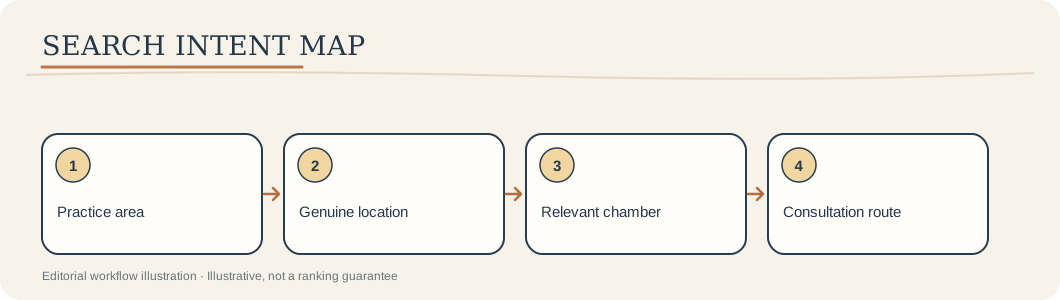
Start with an inventory rather than a list of every Kolkata neighbourhood. Record the firm’s practice areas, lawyers, chambers, service locations, courts or authorities regularly handled, consultation methods and the type of client the firm is equipped to serve.
For practice areas, consider genuine demand around family, criminal, civil, property, corporate, commercial, consumer, labour, intellectual property, tax or succession matters. Do not publish a page merely because a keyword appears attractive. If the firm does not handle that matter, cannot serve that jurisdiction or would refer it elsewhere, the page may create poor enquiries and weaken trust.
Next, group location modifiers that reflect how people actually describe Kolkata. Depending on the firm’s presence, these may include Salt Lake, New Town, Rajarhat, Alipore, Ballygunge, Esplanade, Park Street, Dum Dum, Behala, Howrah or a court and tribunal location. The right combination depends on where the chamber is situated and where the lawyers genuinely practise.
Build a simple demand map with columns for search theme, likely intent, relevant lawyer, service page, location, consultation action and compliance reviewer. This prevents the common mistake of creating dozens of thin pages such as “family lawyer in every Kolkata locality” with nearly identical wording.
Build a compliant website structure
Start with a clear information architecture and a practical SEO strategy that reflects the firm’s actual practice areas, locations and professional obligations.
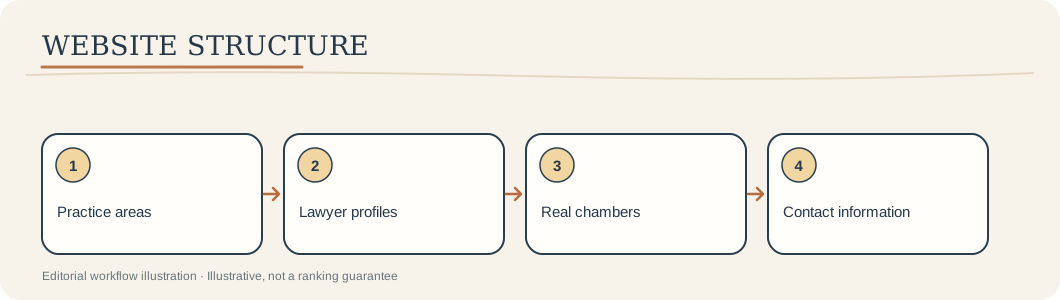
A small firm does not need a large website to compete for relevant local visibility. It needs clear separation between entities and services. A practical structure may include:
- A firm or chambers page explaining the organisation, address, contact details and areas of work.
- One useful page for each important practice area that the firm genuinely handles.
- A lawyer profile for each practising lawyer who is presented publicly.
- A chamber or office page for each real, staffed location that clients can visit.
- Useful legal guides answering common preliminary questions without presenting general information as individual legal advice.
- A consultation page explaining how a person can enquire, what information may be needed and what happens next.
Practice-area pages and location pages should not be duplicates. A family law page should explain family-law services. A Salt Lake chamber page should explain the real office, accessibility, consultation arrangements and the work undertaken there. If the same team serves all of Kolkata from one office, one strong service-area explanation may be better than multiple weak locality pages.
What a practice-area page should include
A useful page should help a prospective client decide whether to make an enquiry, not persuade them with dramatic claims. It should answer practical questions in plain language.
Explain the scope of service
State the types of matters considered, such as divorce proceedings, maintenance, child-related disputes, property due diligence, sale and purchase documentation, consumer complaints, commercial agreements or company advisory work. Explain the scope accurately. Avoid suggesting that the firm handles every possible issue under a broad label if it does not.
Describe the initial process
Tell readers what an initial consultation may cover: understanding the facts, reviewing available documents, identifying the relevant jurisdiction, discussing possible legal routes and explaining the next administrative steps. Do not promise a result, a fixed timeline or a particular court outcome unless the statement can be properly supported and is appropriate to publish.
Clarify location and jurisdiction
State where the lawyer or firm is based, the areas served and any meaningful jurisdictional limits. “Serving Kolkata” is less useful than explaining whether consultations take place at a chamber in central Kolkata, online, or by prior appointment, and whether the matter may involve courts or authorities outside the city.
Present credentials carefully
Lawyer biographies should use verified names, enrolment details where appropriate, qualifications, practice areas and professional memberships that can be substantiated. Experience can be described by type of work or years of practice if accurate, but avoid unsupported labels such as “best”, “top”, “leading” or “number one”. A profile should not imply a specialisation, award or success record that the lawyer cannot evidence.
Provide a clear consultation route
Place the phone number, email, enquiry form or appointment instruction where it is easy to find on mobile. Tell the visitor whether appointments are required, whether documents should be brought and whether a consultation fee applies. A prominent action is useful, but it should not pressure a person to disclose sensitive facts through an unsecured form.
Optimise chamber and office-location visibility
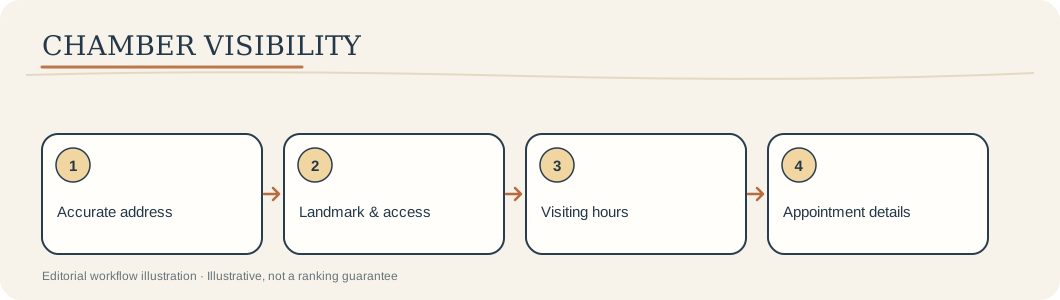
Local visibility depends on the accuracy of the firm’s real-world information. Keep the name, address and phone number consistent across the website, Google Business Profile, professional directories and other legitimate references. Use the actual office name rather than adding practice-area keywords to the business name field.
A chamber page can include the complete address, nearby landmarks, floor or unit information, visiting hours, appointment requirements, public transport guidance, parking information where known and accessibility details. If a lawyer works from a court chamber but does not maintain a public client office there, describe the arrangement accurately. Do not create a location page for a virtual office, an occasional meeting place or an address where clients cannot reasonably meet the firm.
Separate pages for multiple locations are justified only when each location has a genuine presence and distinct information. A single office serving clients across Kolkata should not be represented as a network of local branches.
Google Business Profile for law firms
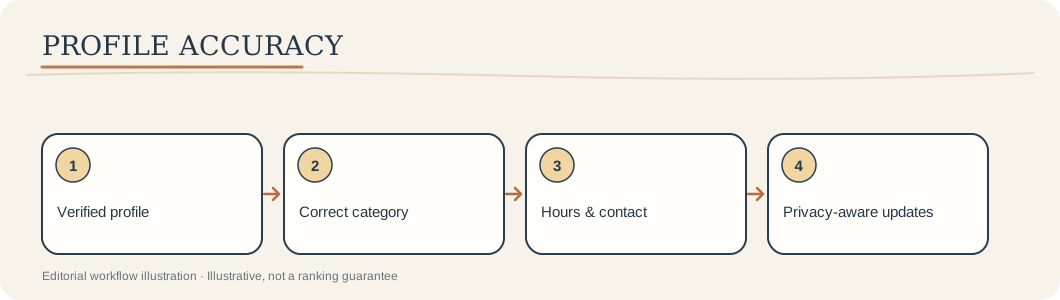
Google Business Profile is important for searches on Google Search and Maps, but it is only one part of local SEO. First, claim and verify the profile using the firm’s real details. Select the most accurate primary category available and use relevant secondary categories only when they genuinely describe the practice. Keep services, phone numbers, hours and appointment information current.
The profile description should state what the firm does, where it is based and how consultations are arranged. It should not be filled with repeated keywords, exaggerated claims or a list of neighbourhoods the firm does not serve. Add clear photographs of the office, signage, reception and consultation environment when appropriate. Do not publish client documents, identifiable case material or images without proper permission.
Updates can explain office closures, consultation arrangements, educational events or new practical information. They should not become a stream of case-result claims or aggressive promotional messages. Check the profile regularly for unauthorised edits, incorrect hours, duplicate listings and changes to phone or address details.
Reviews and testimonials without compromising confidentiality
Reviews can help a person understand whether a chamber is organised, accessible and professional. They cannot safely be treated as a substitute for legal credentials or a guarantee of outcomes.
Ask for genuine feedback from clients who voluntarily choose to provide it. Do not buy reviews, offer incentives for positive reviews, ask staff or associates to pose as clients, or provide scripted statements that create a misleading impression. A request can simply invite an honest review of the client’s experience, without asking the client to discuss the facts or result of a confidential matter.
Respond to reviews without confirming that the reviewer was a client or revealing case details. A neutral response such as an invitation to contact the office privately is safer than discussing allegations, fees, evidence or the outcome in public. Create an internal review process so that responses do not accidentally expose privileged or sensitive information.
Build local authority signals
Search engines use more than the firm’s own website. Consistent references in relevant professional directories, bar or association listings where appropriate, legal publications, chamber listings, local organisations and reputable editorial sources can help establish that the firm and its location are real.
Accuracy matters more than volume. Check every listing for spelling, address, phone number, lawyer name and practice description. Remove or correct duplicate and outdated profiles where possible. Avoid low-quality directory submissions, paid links presented as editorial coverage and networks that publish the same thin description across many websites.
Local references should be natural. A page can mention the relevant court, neighbourhood, business district or consultation location when it changes the advice. It should not insert Kolkata place names into every paragraph simply to attract searches.
Technical and on-page checks
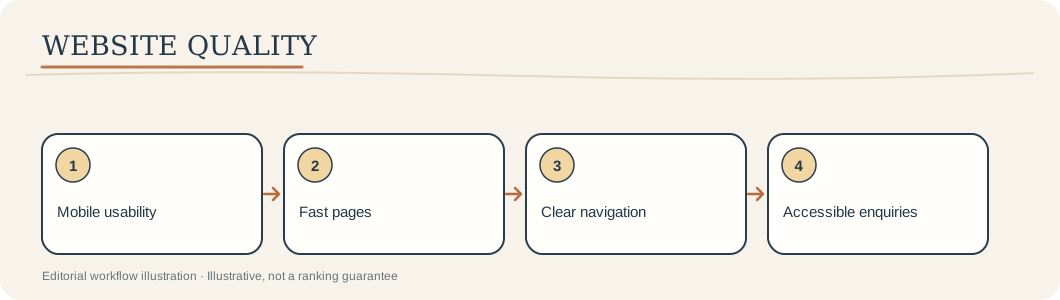
Legal websites often lose enquiries through basic usability problems. Check the following before expanding content:
- Each important page has a distinct title, description, main heading and clear subject.
- Practice-area pages link logically to lawyer profiles, consultation information and relevant related services.
- Phone numbers are tap-to-call on mobile and forms work without unnecessary fields.
- The website loads reliably on mobile, uses readable text and does not hide contact details behind pop-ups.
- Important service and location pages are indexable, while duplicate, thin or private pages are controlled.
- Images have useful file names and alternative text, and office information is written as text rather than shown only in an image.
- Structured data is used only where it accurately describes the organisation, professional service, person or location. It should not be used to make unsupported claims.
- Analytics, Search Console and call or form tracking distinguish page visits from actual consultation enquiries.
Structured data may help machines understand a firm’s details, but it cannot compensate for inaccurate content, poor service information or an inaccessible website.
Ethical guardrails for legal SEO in India
Legal marketing rules and professional guidance can change, and their application may depend on the format, audience and statement being made. Before publishing or approving a campaign, the firm should verify the current requirements of the Bar Council of India, relevant State Bar Council guidance and any other applicable professional rules.
As a working safeguard, avoid guaranteed outcomes, claims of superiority, promises of winning, unverifiable rankings, fear-based language and statements that imply a person must engage the firm. Do not publish confidential case histories, identifiable client information or success stories without proper authority and a careful review of what is being disclosed.
Separate educational content from individual legal advice. A guide can explain general considerations, but it should not pretend to assess a reader’s case without facts and professional consultation. Keep every credential, award, membership, court appearance claim and practice description capable of verification.
Set an approval workflow. The lawyer or an authorised professional reviewer should approve practice-area copy, biographies, testimonials, case references, claims and sensitive legal explanations before publication. An SEO provider can research queries and improve structure, but the firm remains responsible for professional accuracy and public communications.
How to evaluate a local SEO provider
Do not select a provider only because it promises a Google Maps position or a fixed number of leads. Ask how the provider will understand the firm’s practice areas, chambers, jurisdictions and preferred client matters.
A serious evaluation should cover:
- Research: Does the provider separate practice-area, chamber, nearby and consultation intent?
- Content controls: Who approves legal claims, credentials, reviews and sensitive examples?
- Profile work: Will the provider use the actual firm name, address and categories rather than risky keyword changes?
- Technical delivery: Will it inspect indexation, mobile usability, page speed, forms and tracking?
- Reporting: Will reports show queries, page engagement, calls, forms and qualified enquiries rather than rankings alone?
- Transparency: Will the firm see the work completed, listings created, content drafts and changes made?
- Time horizon: Does the proposal explain dependencies and realistic review points instead of guaranteeing a date or position?
Ask for a short first phase if the firm is uncertain. An audit, demand map, profile correction and one or two high-intent pages can reveal whether the provider understands legal services before a wider programme is approved.
Measure commercial enquiries, not vanity metrics
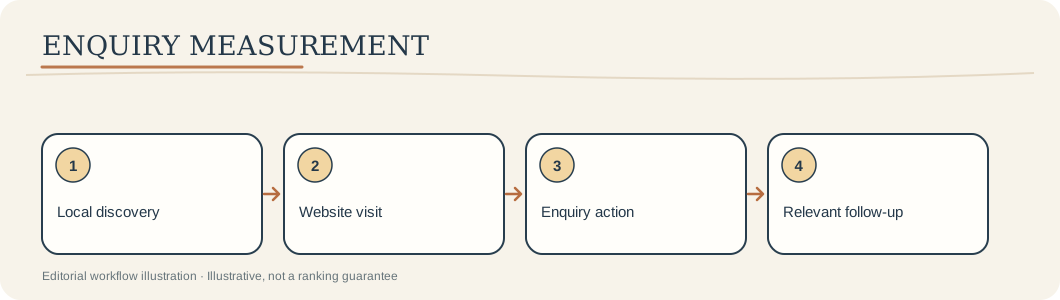
For measurement setup, see the guide to GA4 and Google Tag Manager auditing for lead-generation websites. Track only appropriate enquiry events and protect confidential client information.
Track Google Business Profile calls, website visits from local searches, direction requests, appointment actions, form submissions and phone enquiries. Separately record whether an enquiry is relevant to the firm’s practice area, location and preferred matter type.
Search Console can show which practice-area and location queries bring impressions and clicks. Website analytics can show whether visitors reach the consultation page, but a page view is not a qualified lead. Use a simple enquiry register or CRM with fields for source, practice area, location, date, contact status and outcome. Treat WhatsApp and phone leads carefully: a click may not mean that a conversation occurred.
Review performance monthly or quarterly rather than reacting to daily ranking changes. If a page receives visits but no suitable enquiries, check the service fit, consultation route, copy clarity and response process before adding more keywords.
A practical starting plan for a Kolkata law firm
- List every genuine practice area, practising lawyer, chamber and service jurisdiction.
- Audit the Google Business Profile and all important public listings for name, address, phone and hours accuracy.
- Choose two or three high-intent practice areas where the firm can accept relevant work.
- Create or improve the corresponding pages with accurate scope, process, credentials, location information and consultation actions.
- Set a written approval process for legal copy, reviews, biographies and public claims.
- Fix mobile contact paths, forms, indexation and conversion tracking.
- Request only genuine, voluntary reviews and maintain client confidentiality in every response.
- Measure qualified enquiries and service fit before expanding into additional locations or topics.
Conclusion
Local SEO for lawyers in Kolkata is not simply a matter of adding “Kolkata” to a website or editing a Google Business Profile. The stronger approach connects genuine practice-area demand with accurate chamber information, credible lawyer profiles, useful service pages and a safe consultation process.
Begin with an inventory of the firm’s real services and locations, correct the profile and prioritise a small number of high-intent pages. Put professional review and confidentiality controls in place before publishing. After an initial measurement period, use qualified enquiry data and Search Console patterns to decide whether more practice areas, locations or legal guides deserve investment. This gives the firm a practical way to improve visibility without making promises that legal marketing cannot responsibly make.
About Sanat Haldar
Sanat Haldar is a digital marketing consultant and website developer based in Kolkata, working across SEO, Google Ads, Local SEO, performance marketing and conversion-focused websites. For businesses working on Local SEO services, the relevant service page explains the approach, scope and next steps.
Local SEO consulting and implementation · About Sanat Haldar