How to Get Quality Leads from Google Ads in 2026–27: A Guide for Clinics, Dentists, Hospitals, Nursing Homes & Aesthetic Businesses
A healthcare Google Ads campaign can generate enquiries and still perform poorly.
The forms may be filling. The phone may be ringing. The Google Ads dashboard may show an acceptable cost per lead.
But the reception team may still be receiving people from outside the service area, enquiries for treatments the business does not provide, price-only enquiries, job seekers, students, people looking for free services or prospects who never answer the follow-up call.
That is the real challenge with healthcare lead generation in 2026–27.
The objective should not simply be to generate more leads. It should be to generate more relevant enquiries that the business can actually serve, qualify and convert.
This is particularly important for clinics, dentists, hospitals, nursing homes, aesthetic clinics, cosmetic businesses, diagnostic centres and specialist healthcare practices.
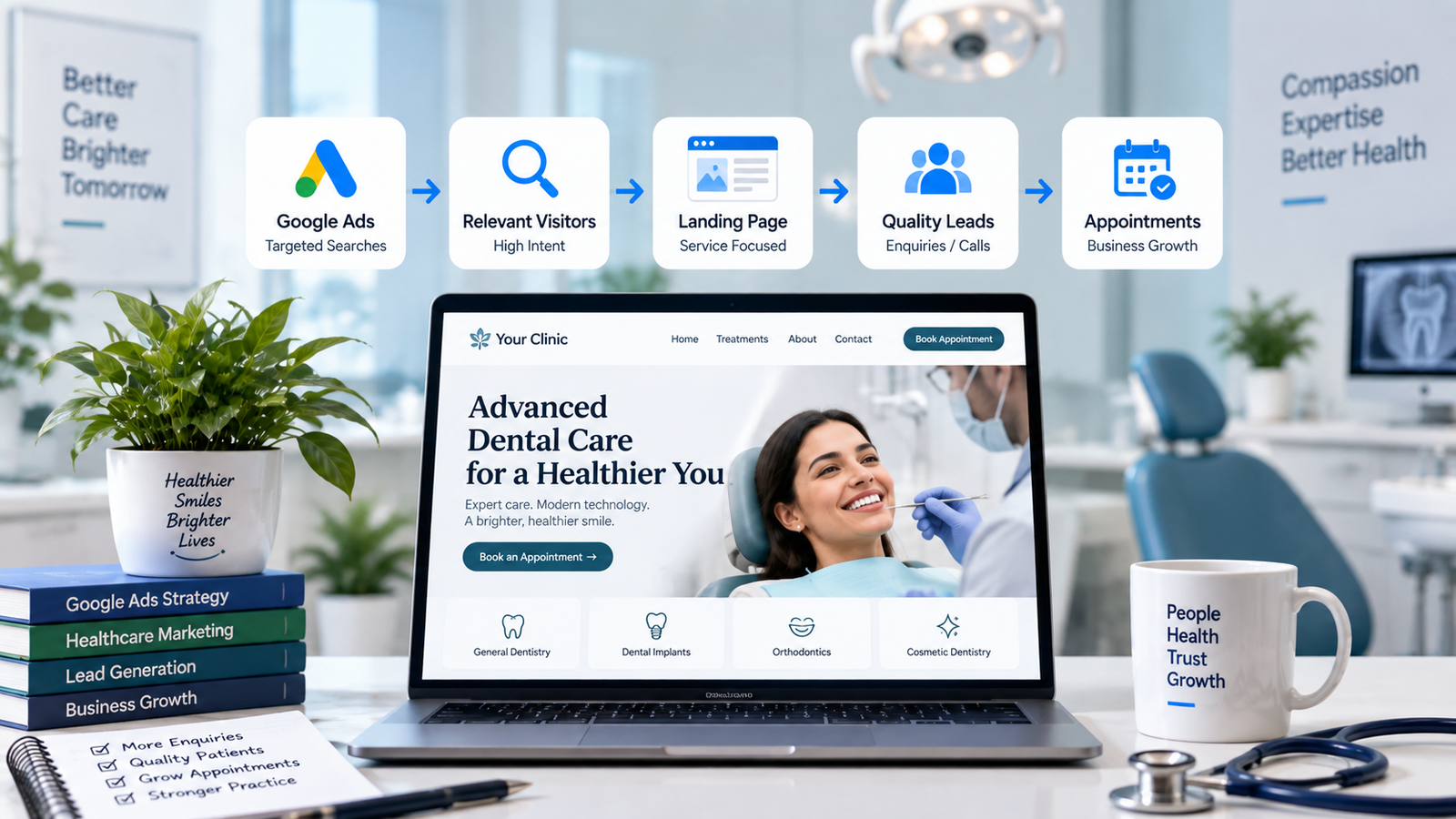
A Google Ads campaign is only one part of the patient acquisition system. The search query, advertisement, landing page, conversion tracking, reception process and follow-up all influence what eventually happens to the advertising budget.
For businesses operating in competitive markets such as Kolkata, this becomes even more important because several providers may be competing for the same treatment-related searches.
In this guide, I will explain how I approach Google Ads lead generation when the objective is not just a higher number of enquiries, but better-quality enquiries.
What Is a Quality Lead for a Healthcare Business?
The first mistake many businesses make is treating every form submission or phone call as a quality lead.
It is not.
A quality lead should be defined according to the business's actual service model.
For example, for a dental clinic, a relevant lead could be a person in the service area enquiring about a treatment the clinic actually provides and who can be contacted for an appointment.
For an aesthetic clinic, the lead may need to be relevant to a particular treatment or consultation offered by the clinic.
For a nursing home, location, care requirements, availability and the nature of the enquiry may be more important than simply receiving a form submission.
For a hospital, a lead may need to be classified by department, service, appointment requirement or other operational criteria.
A practical quality-lead framework can include:
- The person is within the business's realistic service area or is willing to travel.
- The enquiry relates to a service or treatment actually offered.
- The contact information is usable.
- The person can reasonably be reached by the team.
- The enquiry is suitable for the business's current appointment or service capacity.
- The person is interested in taking an appropriate next step.
This definition is not intended to make medical decisions about a person. It is a marketing and operational framework for deciding whether an advertising enquiry is relevant to the service being promoted.
Why Healthcare Google Ads Are Different
Google Ads for a healthcare business cannot be approached exactly like Google Ads for a normal ecommerce product.
A person searching for a pair of shoes may make a purchase immediately.
A person searching for a dental implant, fertility consultation, cosmetic procedure, specialist doctor, nursing home or hospital service may need more information before making contact.
The decision can involve:
- Trust
- Location
- Doctor or practitioner expertise
- Type of treatment
- Cost expectations
- Availability
- Family involvement
- Consultation requirements
- Previous treatment history
- Urgency
This means that simply increasing clicks does not necessarily improve the business result.
The advertising system has to connect the searcher's intent with the correct service, correct page and appropriate next step.
1. Start with High-Intent Search Instead of Trying to Reach Everyone
One of the most important principles in healthcare Google Ads is intent before volume.
A keyword with a large search volume is not automatically a good commercial keyword.
Consider the difference between:
- "dental implant clinic Kolkata"
- "dental implant consultation Kolkata"
- "what is a dental implant"
- "dental implant course"
- "dental implant jobs"
All may contain similar words, but the underlying intent is very different.
The first two can indicate stronger provider or consultation intent. The others may represent information, education or employment intent.
| Search Pattern | Possible Intent | Potential Campaign Action |
|---|---|---|
| Service + location | Looking for a provider | Consider a tightly targeted search campaign |
| Service + appointment/consultation | Stronger action intent | Use direct consultation or appointment messaging |
| Condition/symptom search | Research or information seeking | Use an appropriate informational or clinically relevant page |
| Price-only search | Cost comparison | Use according to the business's pricing strategy |
| Jobs/courses/training | Non-patient intent | Exclude with negative keywords where appropriate |
2. Build Campaigns Around Services and Treatments
A clinic may offer ten or twenty different services, but that does not mean all services should be pushed through one generic campaign.
Consider a dental clinic offering:
- Dental implants
- Root canal treatment
- Orthodontics
- Braces
- Cosmetic dentistry
- Teeth whitening
These services have different search intent, competition, landing-page requirements and potential commercial value.
A treatment-focused structure makes it easier to understand which service is actually generating enquiries.
The same principle applies to aesthetic clinics.
Instead of treating "aesthetic clinic" as one broad campaign, the advertising structure can be organised around the specific services that the clinic genuinely wants to promote.
For hospitals and nursing homes, the structure may instead focus on departments, specialties or major service categories.
3. Use Search Terms to Discover Where the Budget Is Going
Keyword selection is only the beginning.
After the campaign starts generating traffic, the actual search terms provide another layer of information.
You may discover that people are searching for:
- Jobs
- Courses
- Training
- Free treatment
- Cheap services
- Unrelated treatments
- Products rather than services
- Locations the business does not serve
These searches can help identify negative keyword opportunities and structural problems.
Google's own documentation recommends using search-term information to understand how users reached an ad and identify opportunities for keyword refinement and exclusions.
Google Ads Search Terms information
4. Negative Keywords Are a Lead-Quality Tool
Negative keywords are not simply an account-cleaning exercise.
They can directly influence the quality of traffic reaching the landing page.
For example, depending on the business, a healthcare campaign may need to examine searches containing terms such as:
- jobs
- career
- course
- training
- college
- free
- DIY
- meaning
- definition
The actual negative keyword list should come from the business's search-term data rather than from a generic list copied from another account.
Google provides specific guidance on negative keywords and their use in campaigns.
Google Ads Negative Keywords Guide
5. Location Targeting Should Match the Real Patient Journey
A campaign targeting an entire city may appear geographically relevant while still producing poor leads.
Ask a simple operational question:
Where are patients actually willing and able to travel from?
For a local dental clinic, nearby neighbourhoods may generate stronger appointment potential than distant areas.
For a specialist surgeon or hospital department, patients may travel considerably farther.
For a nursing home, location can become even more important because family members may need to visit regularly.
Therefore, geographic targeting should be based on the actual business model rather than simply selecting the largest available city.
For Kolkata campaigns, this can mean analysing areas such as the clinic's immediate neighbourhood, nearby localities, major transport corridors and areas from which the business already receives enquiries.
The important point is to use actual lead data to refine the geographic strategy.
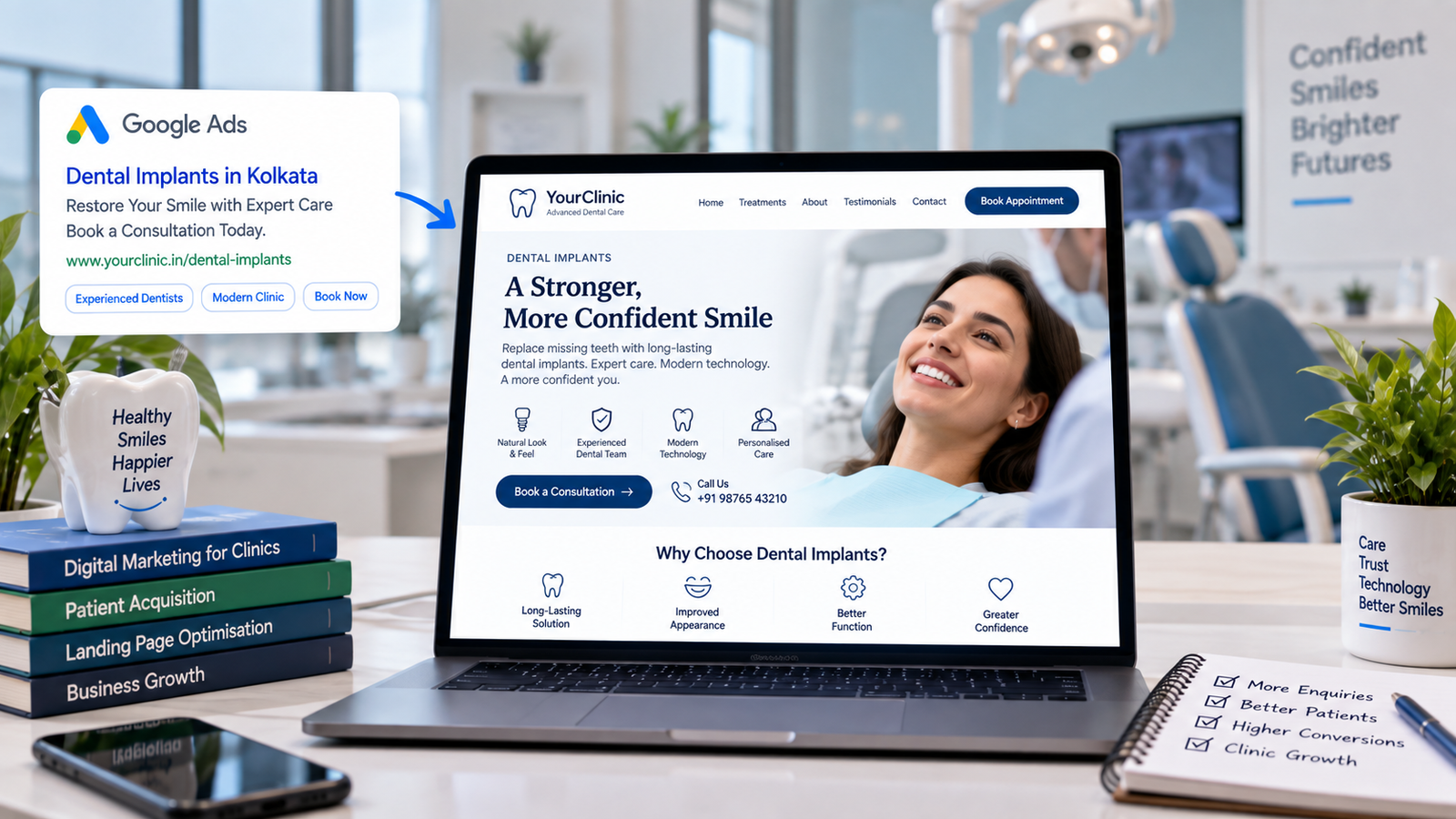
6. Your Advertisement Should Help Qualify the Click
A Google Ad does not have to persuade everybody to click.
It should help the right person recognise that the business is relevant.
A healthcare advertisement should accurately communicate, where appropriate:
- The service or treatment category
- The location
- The type of consultation or enquiry available
- The relevant next step
- Important practical information that can legitimately be stated
Be careful with exaggerated claims such as "best", "guaranteed results", "100% success" or unsupported superiority claims.
In healthcare marketing, credibility and policy compliance are more important than adding aggressive claims simply to increase click-through rate.
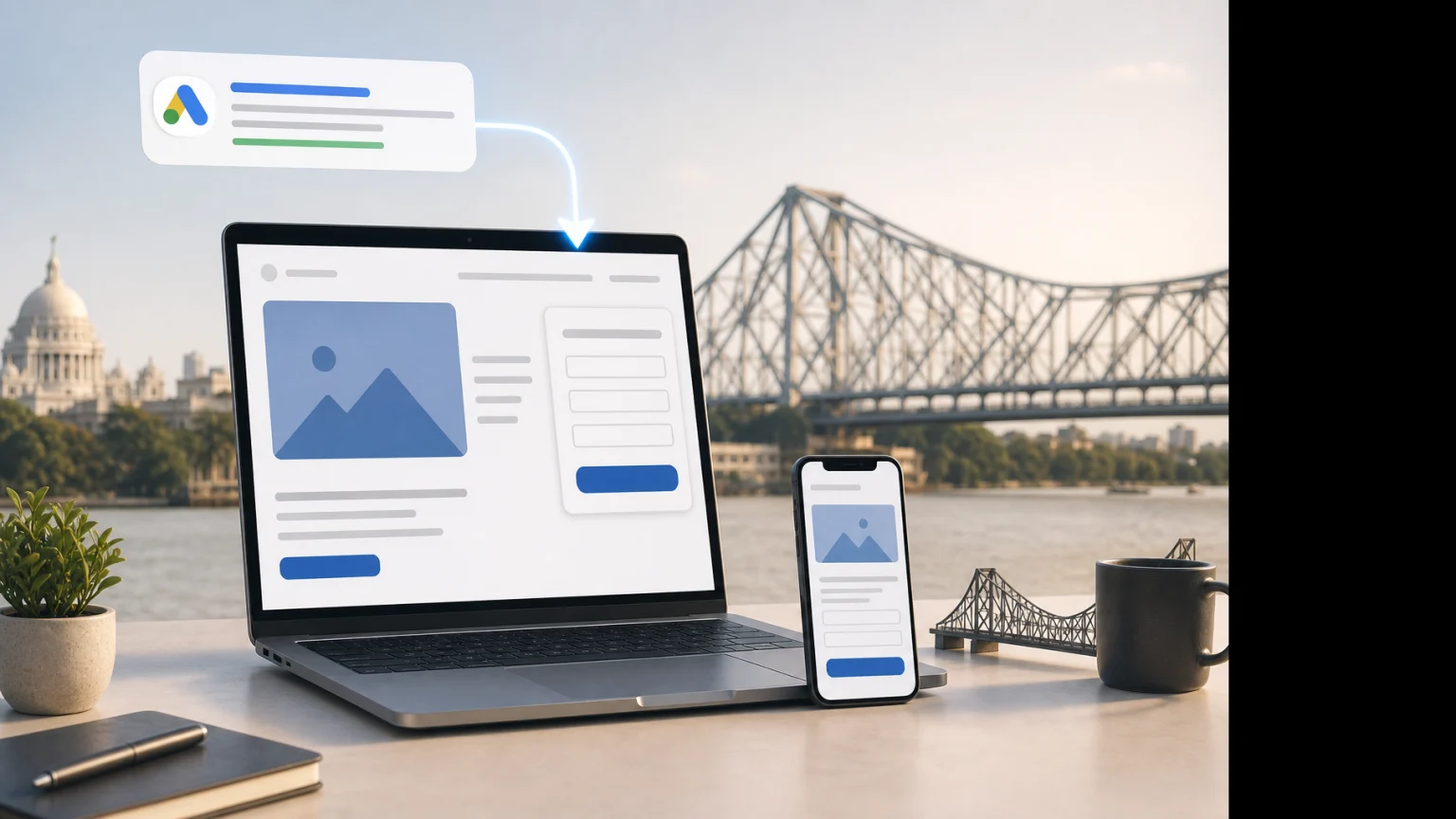
7. Don't Send Every Google Ad Visitor to the Homepage
This is one of the most common problems I see when analysing lead-generation websites.
Suppose someone searches:
"Dental implant clinic Kolkata"
They click an advertisement and land on a homepage containing:
- About the clinic
- Doctors
- Dental implants
- Braces
- Root canal
- Teeth whitening
- Blogs
- Gallery
- Contact
The visitor now has to find the information they were originally searching for.
A treatment-specific landing page can provide a much more direct journey.
8. Build Landing Pages Around the Visitor's Decision
A good healthcare landing page does not need to contain every piece of information about the organisation.
It needs to answer the questions that prevent the relevant visitor from taking the next step.
Depending on the service, the page may need to explain:
- What service is offered
- Which location provides the service
- What type of consultation or enquiry is available
- Who the service is intended for at a high level
- How to call or request an appointment
- Important practical information
- Relevant qualifications or experience that can be verified
- What happens after the enquiry
The page should not make unsupported medical promises.
It should also avoid asking for unnecessary sensitive health information through a basic advertising form.
9. Track Calls, Forms and Appointments Separately
A campaign may report 100 conversions, but what exactly are those conversions?
They could be:
- Form submissions
- Phone calls
- WhatsApp clicks
- Appointment requests
- Duplicate enquiries
- Spam submissions
- Existing patients contacting reception
These actions should not automatically be treated as equal.
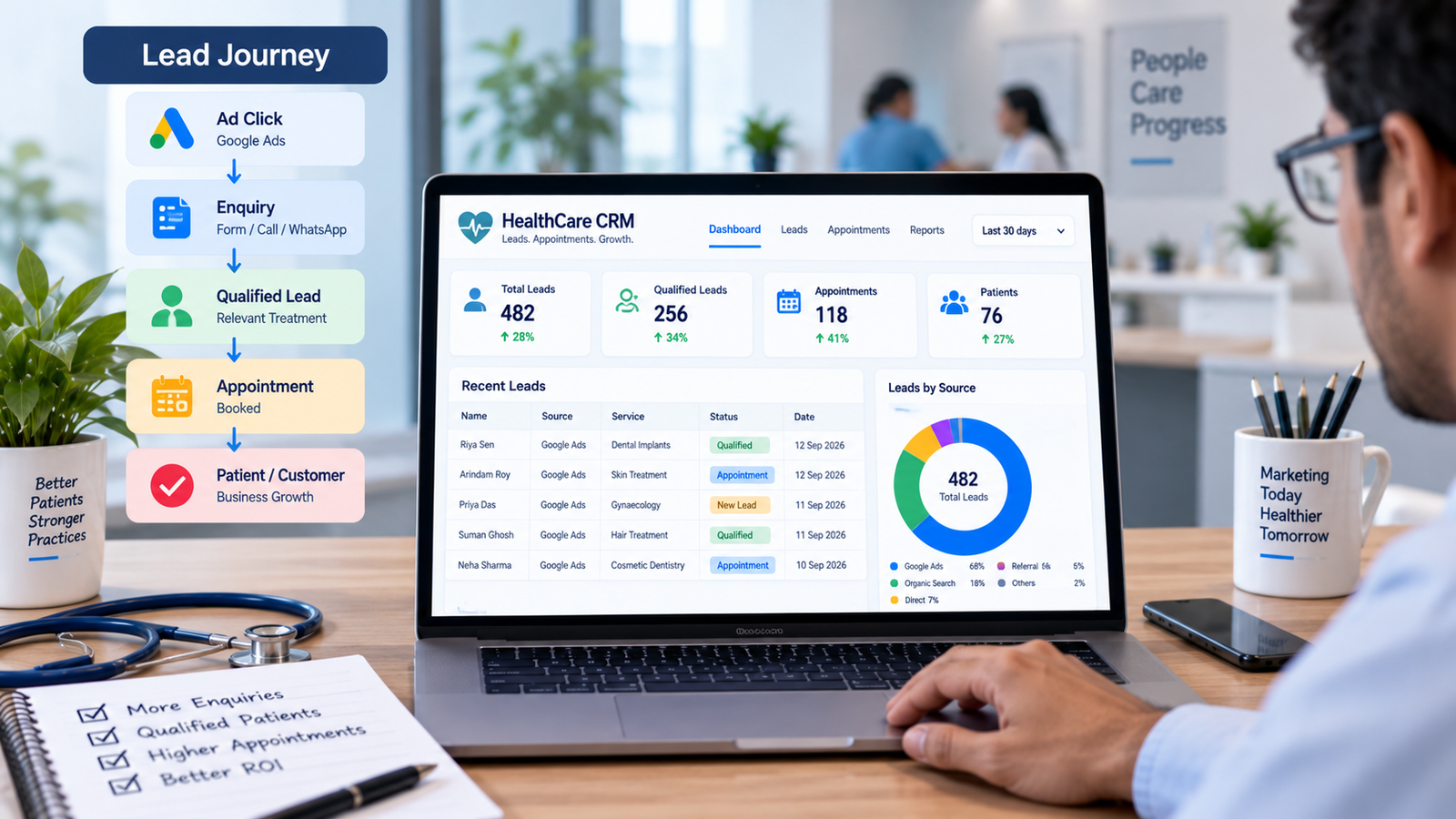
A more useful lead journey might look like this:
Ad click → Enquiry → Validated lead → Qualified lead → Appointment → Attended appointment → Business outcome
The exact stages will vary from one business to another.
10. Connect Google Ads with the Real Lead-Qualification Process
This is where many healthcare campaigns stop short.
The advertising account sees the online conversion.
The reception team sees the actual conversation.
The clinic owner sees whether the person became an appointment.
If these three pieces of information never meet, campaign optimisation becomes incomplete.
Google Ads currently supports Qualified leads and Converted leads as conversion goals. Google explains that qualified leads can represent Google-generated leads that have subsequently been qualified offline through a CRM or internal lead-management process. Converted leads can represent a later defined conversion stage. :contentReference[oaicite:1]{index=1}
That creates an important opportunity for mature lead-generation accounts:
Don't only tell Google which people filled the form. Where technically and legally appropriate, feed back which leads progressed further.
11. Measure Cost Per Qualified Lead, Not Only Cost Per Lead
Cost per lead is an important metric.
But it can become misleading when every conversion is counted equally.
For later-stage analysis:
Consider a simple example.
| Campaign | Leads | Qualified Leads | Appointments |
|---|---|---|---|
| Campaign A | 50 | 12 | 5 |
| Campaign B | 25 | 18 | 10 |
Campaign A has more leads.
Campaign B has fewer leads.
But looking only at lead volume would hide the difference in lead quality.
This is why I prefer analysing the complete funnel rather than celebrating the lowest CPL automatically.
12. Give the Reception Team a Role in Google Ads Optimisation
The reception team is often one of the most valuable sources of advertising data.
They know:
- Which enquiries are genuine
- Which locations are repeatedly irrelevant
- Which services generate confusion
- Which leads never answer
- Which leads book appointments
- Which keywords appear to attract price-only enquiries
That information should flow back into the marketing process.
A monthly meeting between the advertising manager and the business team can be more useful than looking only at the Google Ads dashboard.
13. Aesthetic Clinics Need Extra Attention to Google Ads Policy
Aesthetic and cosmetic businesses need to be particularly careful with advertising claims and audience targeting.
Google classifies health as a sensitive interest category for personalised advertising. Its current policy includes invasive medical procedures such as cosmetic surgery and injections within the health-sensitive category. Advertiser-curated audiences such as Customer Match and advertiser-created data segments are restricted for sensitive interest categories. :contentReference[oaicite:2]{index=2}
This means an aesthetic campaign should not be built simply by assuming that every audience or targeting feature available inside Google Ads is appropriate for the service.
Campaigns should also avoid implying sensitive personal characteristics about the person seeing the advertisement.
Important: Google Ads healthcare policies can change, and healthcare advertising can also be affected by local laws and professional requirements. Always check the current policy before launching or significantly changing a healthcare campaign.
Google's current Healthcare and medicines policy states that healthcare advertisements and destinations are expected to follow applicable laws and industry standards, and certain healthcare categories have additional restrictions or certification requirements. :contentReference[oaicite:3]{index=3}
14. Dental Google Ads Should Be Treatment-Specific
Dental advertising becomes easier to analyse when the campaign structure reflects the actual treatment journey.
For example:
- Dental implants
- Root canal treatment
- Braces
- Orthodontics
- Cosmetic dentistry
- Teeth whitening
Each service can have different search behaviour.
A person searching for "dental implant consultation Kolkata" is not necessarily looking for the same information as someone searching "teeth whitening cost Kolkata".
The advertisement, landing page and conversion goal should reflect that difference.
15. Hospitals and Nursing Homes Need a Different Lead Journey
Hospitals and nursing homes often have a broader range of services than a single-specialty clinic.
Trying to advertise everything through one generic campaign can make reporting difficult.
Instead, identify the services where paid search can realistically contribute to enquiries.
Depending on the organisation, that may include:
- Specialist consultations
- Department-specific appointments
- Diagnostic services
- Planned procedures
- Rehabilitation or care services
- Nursing or assisted-care enquiries
The lead form and follow-up process should then reflect what the relevant department actually needs.
For example, an appointment enquiry may require a different process from a nursing-home admission enquiry.
16. Don't Automatically Increase Budget When Lead Quality Is Poor
If a campaign is producing poor-quality enquiries, increasing the budget may simply increase the number of poor-quality enquiries.
Before increasing spend, check:
- Search terms
- Negative keywords
- Location performance
- Ad-to-landing-page relevance
- Conversion tracking
- Lead qualification
- Response time
- Duplicate and spam submissions
- Service capacity
Only after these areas are reasonably controlled should the question of additional budget become meaningful.
17. Google Ads and Local SEO Should Work Together
Paid search and organic search do not have to operate as separate marketing activities.
If a clinic is advertising a service in Kolkata, the same underlying search-intent research can inform:
- Google Ads campaigns
- Service pages
- Local SEO pages
- Google Business Profile optimisation
- Blog content
- Internal linking
My Local SEO services approach focuses on local search visibility, Google Business Profile optimisation, location relevance and meaningful actions such as calls and enquiries.
Likewise, SEO services can support the organic side of the same search journey.
The advantage is that paid and organic data can help reveal what potential customers are actually searching for.
18. A Google Ads Case Study from Sanat Haldar
Dr Prosenjit Choudhury – Google Ads Lead Generation
One of the published case studies on this website covers Google Ads lead generation for Dr Prosenjit Choudhury's proctology and surgical practice in Kolkata.
- Monthly Google Ads budget: ₹20,000
- Reported quality leads: approximately 30–35 per month
- Campaign focus: Google Search
- Targeting: treatment/service-oriented search terms
- Location: Kolkata
- Optimisation: search-term and negative-keyword analysis
- Landing-page focus: conversion-oriented experience
These are published campaign figures from the case study and should not be interpreted as a guarantee for another healthcare business. Results can change depending on competition, service, budget, location, search demand, landing page and lead qualification.
19. A Lead Generation Lesson from Local SEO
Kalyani Mental Health Nursing Home
Another published case study on this website focuses on SEO and Local SEO for Kalyani Mental Health Nursing Home.
The case study reports first-page visibility for a targeted local search and approximately 100–120 monthly leads during the reported period.
The strategy included Google Business Profile optimisation, location-focused keyword research, content development and local relevance.
The broader lesson is important: lead generation does not always come from paid advertising alone. Depending on the business and search behaviour, Google Ads, SEO and Local SEO can support different parts of the same acquisition journey.
20. What I Would Check Before Launching a Healthcare Google Ads Campaign
- Is the service clearly defined?
- Is the target location realistic?
- Do we know what counts as a quality lead?
- Are the important search terms based on actual intent?
- Are irrelevant searches being excluded?
- Does each major service have the right landing page?
- Are phone calls being tracked correctly?
- Are forms being tracked correctly?
- Can the team identify qualified leads?
- Is the follow-up process defined?
- Are Google Ads healthcare policies being checked?
- Are landing-page claims accurate and supportable?
- Is the business capable of handling the expected enquiry volume?
21. A Practical 30-Day Google Ads Improvement Process
Week 1: Audit the Foundation
Review services, locations, appointment capacity, existing landing pages, forms, phone tracking and the current definition of a quality lead.
Week 2: Rebuild Around Search Intent
Analyse keywords and search terms. Separate different service categories and add negative keywords based on actual irrelevant traffic.
Week 3: Improve the Conversion Experience
Align advertisement messaging with the landing page. Make the next step clear. Remove unnecessary form fields and test calls and forms on real devices.
Week 4: Analyse Quality
Do not review only clicks and CPL. Compare qualified leads, locations, search terms, calls, appointments and follow-up outcomes.
This creates a much more useful feedback loop than simply increasing or decreasing the daily budget based on lead volume.
22. How Sanat Haldar Can Help Clinics, Dentists, Hospitals & Aesthetic Businesses
I am Sanat Haldar, a digital marketing consultant and website developer based in Kolkata. My approach to Google Ads is not limited to setting keywords and increasing budgets.
The objective is to understand where the business is losing potential customers and then improve the complete digital journey.
Depending on the business, that can involve:
- Google Ads campaign planning
- Search-intent and keyword research
- Campaign and ad-group structure
- Negative keyword management
- Location targeting
- Search-term analysis
- Google Ads conversion tracking
- Landing-page planning
- Lead-generation optimisation
- SEO
- Local SEO and Google Business Profile
- Website and landing-page development
- Performance marketing
My Google Ads services in Kolkata focus on search intent, campaign structure, search-term and negative-keyword review, landing-page relevance, conversion tracking and ongoing optimisation.
For businesses where the website itself is creating a conversion problem, website development and landing-page improvements can become part of the same project.
Where organic visibility and Google Maps presence are important, I can also work on SEO and Local SEO.
For businesses that need a broader acquisition strategy, performance marketing can connect advertising, conversion tracking and the wider customer journey.
You can also learn more about my background and working approach on the About Sanat Haldar page.
23. The Goal Is Not More Leads. It Is a Better Lead System.
Healthcare Google Ads should not be treated as a simple traffic-generation exercise.
A campaign can have thousands of clicks and still fail to generate meaningful business outcomes.
The stronger approach is to build a connected system:
Relevant search
↓
Relevant advertisement
↓
Relevant landing page
↓
Enquiry
↓
Qualified lead
↓
Appointment
↓
Business outcome
If the campaign is generating the wrong searches, fix targeting.
If the advertisement is attracting the wrong people, fix the messaging.
If visitors are not enquiring, investigate the landing page.
If enquiries are poor, analyse search terms and lead qualification.
If good leads are not becoming appointments, investigate the follow-up process.
This is the approach I believe makes Google Ads more useful for healthcare businesses: optimise the complete journey rather than one dashboard metric.
Frequently Asked Questions
How can I get quality leads from Google Ads for my clinic?
Start by defining what a quality lead means for the clinic, then build campaigns around high-intent services, use appropriate location targeting, review search terms, exclude irrelevant searches, create relevant landing pages and track lead quality beyond the initial form submission.
Why am I getting leads but very few patients?
The problem may be outside the keyword list. Search intent, location targeting, landing-page relevance, lead qualification, response time and reception follow-up can all influence the final result.
Should I optimise Google Ads for the lowest CPL?
Not automatically. A low cost per lead can be misleading if many enquiries are irrelevant. Compare qualified leads and booked appointments alongside CPL.
Should a clinic send Google Ads traffic to its homepage?
Not necessarily. Treatment-specific searches often benefit from a landing page that directly addresses the service, location, next step and relevant information.
Are Google Ads suitable for aesthetic clinics?
Google Ads can be used for eligible healthcare and aesthetic services, but healthcare and personalised-advertising policies can impose additional restrictions. Current Google policies should be checked before campaign launch.
Can Google Ads and SEO work together for healthcare businesses?
Yes. Search-intent data from paid campaigns can inform SEO and content planning, while SEO and Local SEO can provide organic visibility for relevant services and locations.
Can Sanat Haldar manage Google Ads for healthcare businesses in Kolkata?
Yes. I work with Google Ads, SEO, Local SEO, websites and lead-generation campaigns, with a focus on connecting search visibility to meaningful business enquiries.
Conclusions
Getting quality leads from Google Ads in 2026–27 is not about finding one magical keyword, increasing the daily budget or switching on every available campaign feature.
It is about understanding the person behind the search.
What are they looking for?
Are they in the right location?
Does the business actually provide the requested service?
Does the advertisement set the correct expectation?
Does the landing page answer the important questions?
Can the business respond quickly?
And most importantly, can the advertising account learn which enquiries eventually become meaningful business opportunities?
When these elements are connected, Google Ads becomes more than a source of clicks and forms. It becomes a measurable part of the business's patient or customer acquisition system.
For clinics, dentists, hospitals, nursing homes and aesthetic businesses, that is the real objective: not simply more leads, but better-qualified opportunities.